A few years ago, I read two books that greatly impacted my teaching
attitude and perspective. These two books are ones I often recommend
to my teacher friends if they have not yet read them. Sometimes,
simply becoming educated to the different lifestyles, situations and or
the cultures our students find themselves in can help us better
understand them. Equally important is identifying when a child may be
in or have previously suffered terrible abuse or trauma. The second of
the two books is not for the faint of heart, but rather for those
persons who desire to better understand the gravity of "why" some
children are the way they are.
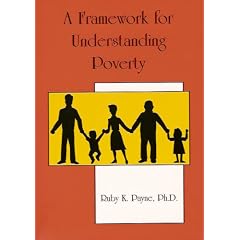
A Framework for Understanding Poverty by, Ruby K. Payne, Ph.D.
Ghosts from the Nursery by, Robin Karr-Morse and Meredith S. Wiley
Since beginning my Master's in Education, I have read and used the following text for a class on Special Ed. Law. I find it to be the most clear, concise explanations of IDEA and through the cases illustrated in the book it gives you the tools to better understand the role of student, parent, teacher, administrator and school district when it comes to personal responsibility in education. This text impressed upon me the reality of the ever changing law and the importance of documentation. Merely stating a student has made progress or mastered a skill is not enough. There must be definitive proof in the event a situation is taken to mediation or Due Process.
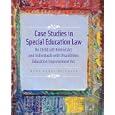
Case Studies in Special Education Law by, Mary Konya Weishaar

A Framework for Understanding Poverty by, Ruby K. Payne, Ph.D.
Ghosts from the Nursery by, Robin Karr-Morse and Meredith S. Wiley
Since beginning my Master's in Education, I have read and used the following text for a class on Special Ed. Law. I find it to be the most clear, concise explanations of IDEA and through the cases illustrated in the book it gives you the tools to better understand the role of student, parent, teacher, administrator and school district when it comes to personal responsibility in education. This text impressed upon me the reality of the ever changing law and the importance of documentation. Merely stating a student has made progress or mastered a skill is not enough. There must be definitive proof in the event a situation is taken to mediation or Due Process.
Case Studies in Special Education Law by, Mary Konya Weishaar